
How Much Profit Can A Pillow Manufacturing Business Make Per Year?
Watch The Pillow Production Line Video
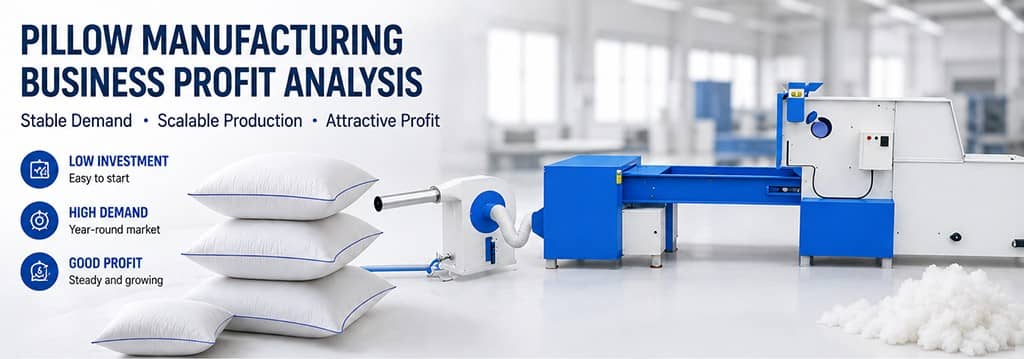
In recent years, the global bedding and home textile market has continued to grow steadily. Among them, pillows remain one of the most stable and high-demand products in the home furnishing industry.
Because of relatively low startup investment, stable market demand, and scalable production capacity, many entrepreneurs are beginning to enter the pillow manufacturing business.
However, one question is asked frequently by new investors: how much money can a pillow factory actually make in one year?
The answer depends on several factors, including production scale, labor cost, material quality, sales channels, local market demand, and automation level.
Based on actual market conditions, even a small pillow workshop can generate considerable annual profit when operated properly.
Is The Pillow Manufacturing Business Profitable?
For most small and medium-sized factories, the answer is yes.
Pillows belong to fast-moving home textile products with continuous consumer demand, repeat purchase potential, wide price range, and flexible production styles.
Unlike highly seasonal industries, pillow products can usually maintain stable sales throughout the year.
In many countries, pillows are sold through furniture stores, bedding wholesalers, supermarkets, hotels, online marketplaces, and OEM export orders. This creates multiple sales opportunities for small manufacturers.
Example Of A Small Pillow Factory Profit Estimate
Let’s take a small startup factory as an example.
Basic Startup Configuration
A small pillow workshop may include:
Fiber Opener machine
Air compressor
Sewing equipment
Packing equipment
With basic automation, a small factory can often produce 300–800 pillows per day, depending on pillow size and filling type.
Estimated Production Cost Per Pillow
Below is a simplified example based on common polyester fiber pillows.
| Item | Estimated Cost |
|---|---|
| Polyester Fiber Filling | $1.00 – $2.50 |
| Pillow Fabric Cover | $0.80 – $2.00 |
| Labor Cost | $0.30 – $1.00 |
| Electricity & Packaging | $0.20 – $0.50 |
| Total Production Cost | Approximately $2.30 – $6.00 |
Estimated Selling Price
Depending on quality and market positioning:
| Product Type | Estimated Selling Price |
|---|---|
| Standard Pillow | $5 – $12 |
| Hotel Pillow | $10 – $25 |
| Premium Pillow | $20 – $50+ |
This means that even ordinary pillows may still maintain reasonable profit margins.
Example Annual Profit Calculation
Let’s assume a small factory produces 500 pillows per day and works 25 days per month.
Monthly production: 12,500 pillows.
If the average net profit per pillow is only $2, then the estimated monthly profit could reach:
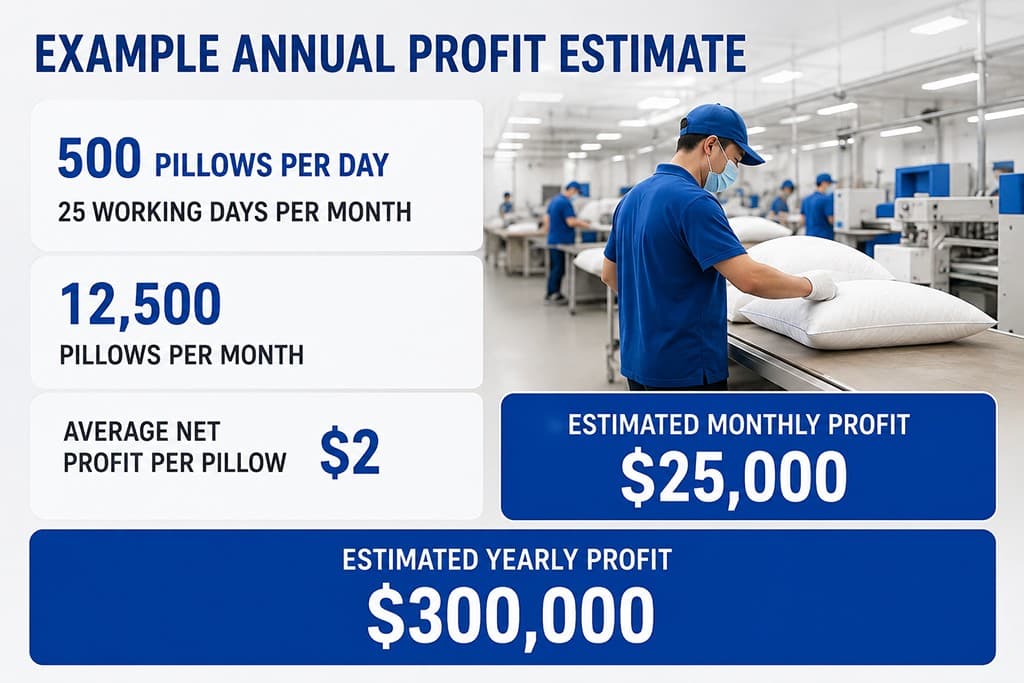
Approximately $25,000 Per Month
Estimated yearly profit:
Approximately $300,000 Per Year
Actual profit depends heavily on local labor costs, material prices, equipment efficiency, sales capability, and order stability.
But this example shows why many small manufacturers continue entering the pillow industry.
Why Automation Matters In Pillow Production
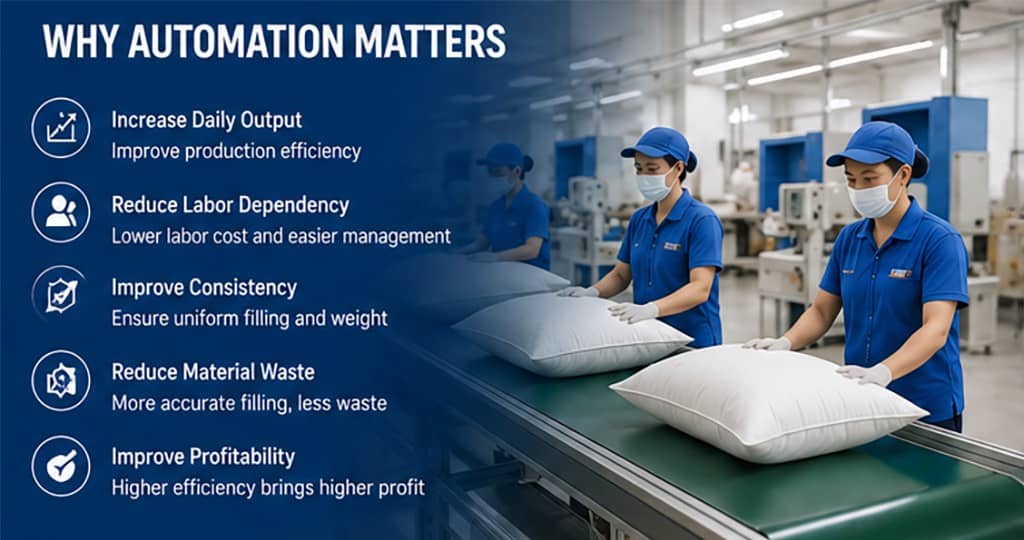
One of the biggest factors affecting profitability is production efficiency.
Manual filling often causes uneven filling, slow production, higher labor cost, and inconsistent product quality.
Using proper pillow filling equipment can help factories increase daily output, reduce labor dependency, improve consistency, reduce material waste, and improve packaging efficiency.
For growing businesses, automation can significantly improve long-term profitability.
What Machines Are Commonly Used In A Pillow Factory?
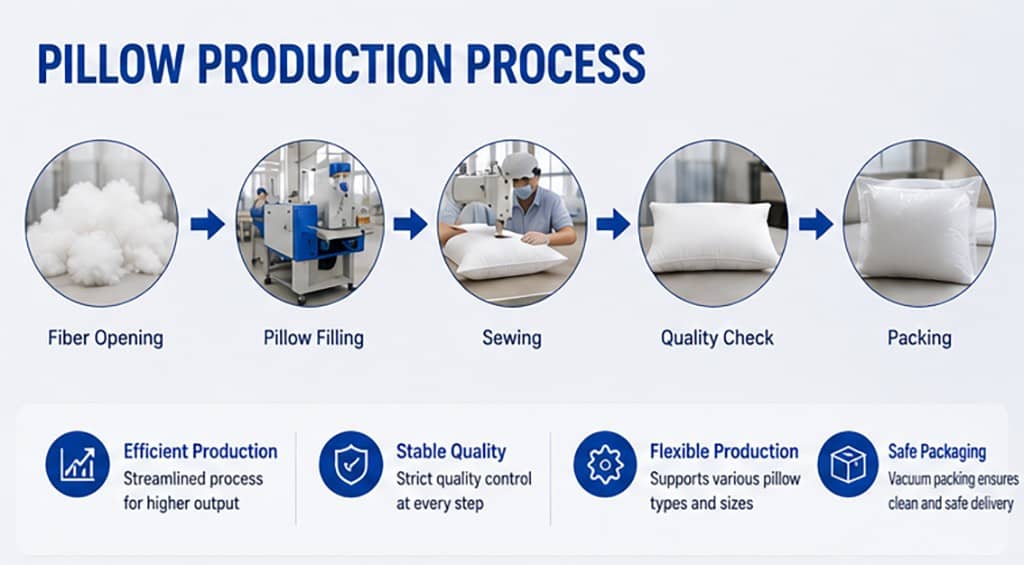
Most modern pillow workshops usually use:
Pillow filling machine
Weighing system
Vacuum compression packing machine
Different factory sizes require different machine configurations.
Some startups begin with only a basic filling machine, while larger factories may build fully automated production lines.
Is Pillow Manufacturing Suitable For Small Businesses?
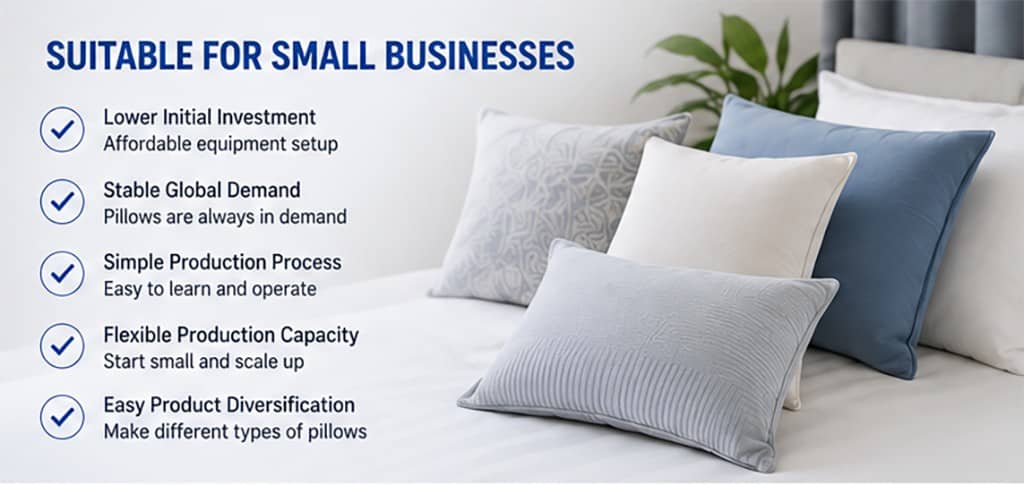
Yes. Compared with many manufacturing industries, pillow production has several advantages for startups:
Lower initial investment
Stable global demand
Relatively simple production process
Flexible production capacity
Easy product diversification
Many successful factories actually started from small workshops with only a few workers and basic filling equipment.
Final Thoughts
The pillow manufacturing business can become a stable and profitable industry when combined with the right market strategy and suitable equipment configuration.
For entrepreneurs who are entering the bedding or home textile market for the first time, starting with a small but efficient production setup is often the safest approach.
As production grows, factories can gradually expand into hotel pillows, vacuum-packed pillows, premium bedding products, and customized OEM production.
Free Production Solution Support From INNOLD
If you are considering starting a pillow manufacturing business, INNOLD can provide free professional suggestions based on your budget, production capacity, local market conditions, factory size, and product positioning.
Whether you want to start with a small workshop or build a complete automated pillow production line, our team can help recommend suitable equipment solutions for your business.

Post time:2026-05-13
