
Can Recycled Fiber Be Used For Pillow And Toy Filling?
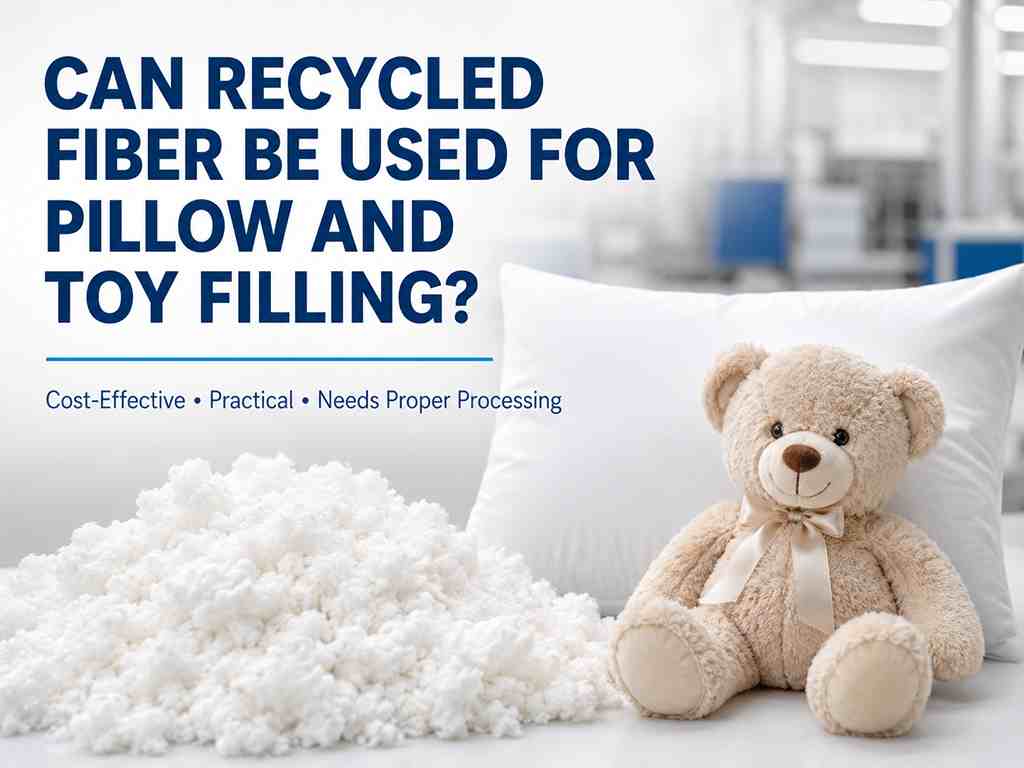
In the pillow, plush toy, cushion, and home textile industries, material costs are a critical factor affecting production profitability.
For startups and cost-sensitive manufacturers, recycled fibers are often viewed as a viable alternative filling material.
However, many customers frequently ask the same question:
Can recycled fibers be used to fill pillows and toys?
The answer is yes, but it depends on the product's market positioning, fiber quality, production processes, and equipment configuration.
This article explores when it is appropriate to use recycled fibers, the key factors manufacturers need to consider, and how to enhance the filling performance of recycled fibers.
What Is Recycled Fiber?
Regenerated fibers generally refer to fiber materials processed from sources such as recycled textiles, polyester waste, fabric scraps, or other reusable fiber materials.
After undergoing sorting, cutting, opening, and subsequent processing, these fibers can be reused as filling materials for a wide range of products.
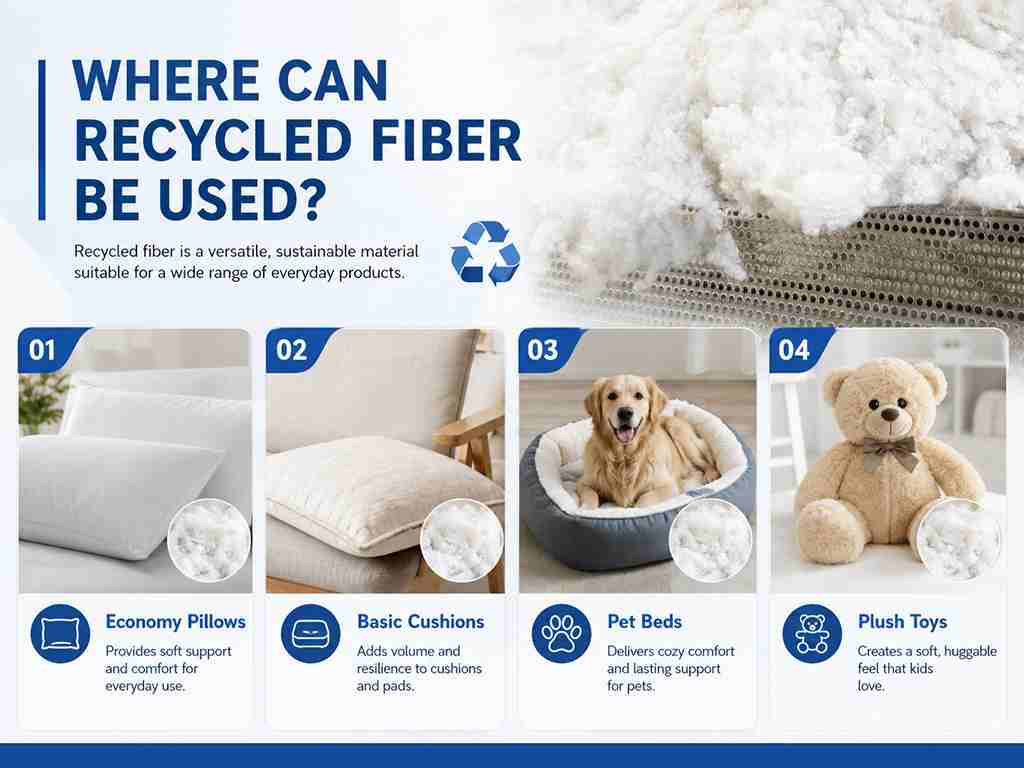
Common applications include budget-friendly pillows, cushions, pet beds, sofa fillings, plush toys, various home textiles, and protective packaging fill.
Compared to virgin polyester fibers, regenerated fibers typically have lower material costs, making them an attractive option for manufacturers seeking to reduce production expenses.
Can Recycled Fiber Be Used For Pillow Filling?
Yes, recycled fiber can be used as pillow filling and is particularly suitable for mid-to-low-end pillow products.
For instance, recycled fiber is ideal for promotional pillows, budget-friendly household pillows, standard hotel pillows, sofa cushions, pet pillows, and affordable bedding.
If your pillow products rely primarily on price competitiveness, using recycled fiber can help reduce production costs.
Can Recycled Fiber Be Used For Plush Toy Filling?
Recycled fibers can be used in certain plush toys, but manufacturers must exercise great caution.
Plush toys generally require a soft feel, clean materials, even filling, good shape retention, and consistent quality and safety.
The use of recycled fibers may be acceptable for low-cost toys, promotional gifts, or large decorative plush products.
Advantages Of Using Recycled Fiber
Recycled fiber has several advantages for manufacturers.
1. Lower Material Cost
The greatest advantage of recycled fiber is its ability to reduce costs.
For factories mass-producing pillows, cushions, or pet beds, material costs often account for a significant portion of total production costs.
Using recycled fiber helps lower:
Raw material costs
Unit production costs
Market pricing pressure
This is particularly beneficial for price-sensitive markets.
2. Suitable For Low-To-Medium-End Products
Not all products require premium fiber materials.
In many markets, customers prioritize affordability over high-end comfort.
Recycled fibers are suitable for the following products:
Budget-friendly pillows
Basic cushions
Pet products
Sofa fillings
Low-cost plush toys
3. Environmental Value
Using recycled fibers helps reduce textile waste and improve material utilization.
For some customers, recycled materials can be an attractive selling point.
Products made from recycled fibers can be positioned as:
Eco-friendly
Cost-effective
Resource-efficient
Sustainable
This helps manufacturers expand into specific market segments.
Common Problems With Recycled Fiber
Despite their advantages, regenerated fibers also have certain limitations.
It is important to be aware of these issues before use.
1. More Dust And Impurities
Compared to virgin fibers, recycled fibers may contain higher levels of dust, fine particles, or impurities.
This can affect:
Product cleanliness
Filling smoothness
Machine operation
The working environment for personnel
If the material is not handled properly, dust may also accumulate inside the filling machine.
2. Uneven Fiber Length
Regenerated fibers may vary in length and lack structural uniformity.
This can lead to:
Uneven filling
Reduced softness
Poor resilience
Fiber clumping
Inconsistent product appearance
This can be a disadvantage for products requiring a soft, uniform feel.
3. Higher Blockage Risk
If recycled fibers contain clumps, short fibers, or impurities, they are more likely to clog pipelines or obstruct nozzles and airflow channels.
This issue is particularly common in the following situations:
Inadequate fiber opening
Insufficient air pressure
Undersized nozzles
Lack of regular equipment cleaning
Therefore, selecting and matching the right equipment is crucial when processing recycled fibers.
How To Improve Recycled Fiber Filling Quality
1. Use A Fiber Opening Machine
The opening machine plays a crucial role when using recycled fibers.
It helps loosen compressed fibers and break up fiber clumps prior to the filling process.
Thorough opening improves:
Fiber loft
Smoothness of the filling process
Product uniformity
Filling efficiency
Prevention of clogging
Robust and consistent opening performance is particularly important for recycled fibers.
2. Choose Cleaner Recycled Fiber
Not all regenerated fibers are of the same quality.
Manufacturers should select regenerated fibers that possess the following characteristics:
Lower dust content
Fewer impurities
More uniform fiber length
Better softness
Superior opening performance
High-quality raw materials can reduce many production issues.
3. Match The Correct Air Pressure
A more stable airflow may be required when using recycled fibers for filling.
If the air pressure is too low, fibers may accumulate inside the piping.
Selecting a suitable air compressor helps improve filling stability and reduce clogging.
4. Clean The Machine Regularly
Since recycled fibers may contain significant amounts of dust or short fiber particles, regular cleaning is essential.
Operators should clean the following areas:
Filling pipes, nozzles, airflow channels, fiber outlets, and the machine interior.
Proper maintenance helps reduce downtime and extend the machine's service life.
When Should You Avoid Recycled Fiber?
If your product requires any of the following, recycled fibers may not be suitable:
An ultra-soft hand feel
High resilience
A premium appearance
Strict cleanliness standards
Baby-safe standards
High-end export quality
In such cases, virgin polyester fiber, hollow conjugate fiber, silicone-coated fiber, PP cotton, or down-alternative fiber may be more ideal choices.
Regenerated fibers can serve as filling material for pillows and toys, making them particularly suitable for mid-to-low-end products and cost-sensitive markets.
While they offer advantages such as lower material costs and significant environmental benefits, manufacturers must address issues regarding dust, impurities, uneven fiber length, softness, and the risk of clogging.
For manufacturers, the optimal choice depends on product positioning, quality requirements, production budgets, and target markets.
FAQ: Recycled Fiber For Pillow And Toy Filling
Can recycled fibers be used for pillow filling?
Yes. Recycled fibers are suitable for low-cost pillows, budget bedding, sofa cushions, pet pillows, and other cost-sensitive products. However, for premium pillows requiring superior softness and resilience, hollow fibers, siliconized fibers, or down-alternative fibers may be more appropriate.
Can recycled fibers be used for plush toy filling?
Yes, recycled fibers can be used for certain plush toys—particularly low-cost items, promotional toys, or large decorative plush products. However, for baby toys, high-end plush toys, or export-grade toys subject to strict quality standards, the use of cleaner, higher-quality filling materials is recommended.
What issues might arise when using recycled fibers for filling?
Common issues include higher levels of dust and impurities, uneven fiber lengths, reduced softness, fiber clumping, and a higher risk of clogging. These problems can usually be mitigated by using appropriate Fiber Opening Machines and properly maintaining the filling equipment.
Do recycled fibers need to be opened before filling?
Yes. Recycled fibers should be properly opened before filling. Using a fiber opening machine helps loosen the material, break up fiber clumps, increase loft, and reduce clogging during the filling process.
How can clogging issues be minimized when using recycled fibers?
To minimize clogging, manufacturers should thoroughly open the fibers, select the appropriate nozzle size, maintain stable air pressure, use cleaner recycled materials, and regularly clean the filling equipment. A well-configured production line can also improve filling stability.
Can INNOLD assist with selecting recycled fiber filling equipment?
Yes. INNOLD can provide professional equipment selection advice based on your fiber material, product type, daily output, factory size, and budget. Whether you plan to produce pillows, plush toys, cushions, or pet beds, our team can recommend the right fiber opening and filling solutions for your needs.
Free Production Solution Support From INNOLD
Different fiber materials require different machine configurations.
If you plan to use recycled fiber for pillow, toy, cushion, or pet bed production, INNOLD can help evaluate your material characteristics, production capacity, and product requirements.
Based on your actual needs, we can recommend suitable fiber opening machines, filling machines, air compressor configurations, and complete production line solutions.
Contact INNOLD today to get a customized fiber filling solution for your business.
Post time:2026-07-15
